CPF Home Loan Singapore: Using Your OA for HDB and Private Property in 2026
For most Singapore home buyers, the CPF Ordinary Account is the biggest pot of money they have to work with. It can pay up to 100% of an HDB concessionary loan, or up to 20% of a 25% bank-loan downpayment on a condo. Four limits decide how far it stretches. And accrued interest at 2.5% p.a. follows you all the way to the sale.

- What CPF OA can pay for: HDB vs bank loan
- The four CPF limits every buyer should know
- Accrued interest: the number that surprises sellers
- OA for monthly instalments vs paying in cash
- Worked examples: HDB and private condo
- Decoupling, second properties and the BRS rule
- HDB housing grants and CPF
- Refinancing and selling: CPF continuity
- Plan CPF and mortgage together
- Common questions
What CPF OA Can Pay For: HDB vs Bank Loan
The rules are not the same for an HDB flat on an HDB concessionary loan and a property (HDB or private) on a bank loan. Sort out which one you are on before you sign anything.
HDB flat on HDB concessionary loan (2.6% p.a. in April 2026):
- Downpayment: up to 20% of purchase price, fully payable from CPF OA. No 5% cash minimum.
- Monthly instalments: deductible from OA in full each month.
- Buyer's Stamp Duty (BSD): payable from OA.
- No Withdrawal Limit cap, as long as the lease covers the youngest buyer to age 95.
HDB flat or private condo on a bank loan (from 1.40% p.a. fixed; 1.65%–1.85% on 3M SORA):
- Downpayment: 25% of purchase price for first property. The first 5% must be cash. The next 20% can come from CPF OA.
- Monthly instalments: deductible from OA, or paid in cash. You choose at loan acceptance.
- BSD: payable from OA.
- ABSD cannot be paid from CPF. Cash only. A Singapore Citizen buying a second property at S$2M now faces S$400,000 ABSD in cash.
If you are weighing the loan side of this choice, our breakdown of the HDB loan vs bank loan covers the rate, lock-in, and CPF cashflow trade-offs. First-timers should also read the first-time HDB buyer guide for the full purchase sequence.
The Four CPF Limits Every Buyer Should Know
Four things decide how much CPF OA you can actually put into a property. Miss one and you end up topping up in cash partway through the loan.
1. Your OA Balance
The simplest limit is what is sitting in your OA today. The first S$20,000 in OA earns an extra 1% (so 3.5% p.a. on that slice), and a lot of buyers leave that S$20K untouched as a buffer. CPF contribution rates step down past age 55, so your OA grows more slowly right when you need it most for retirement. Keep that in mind.
2. The Valuation Limit (VL)
The VL is the lower of the purchase price or the bank/HDB valuation. It is the base figure for the Withdrawal Limit, and the point past which using your OA freely starts to come with extra rules.
3. The Withdrawal Limit (WL), Private Property Only
For private property bought on a bank loan, the total CPF you use (principal plus accrued interest) is capped at 120% of the VL. Once you hit that cap, every cent of the remaining loan has to come from cash.
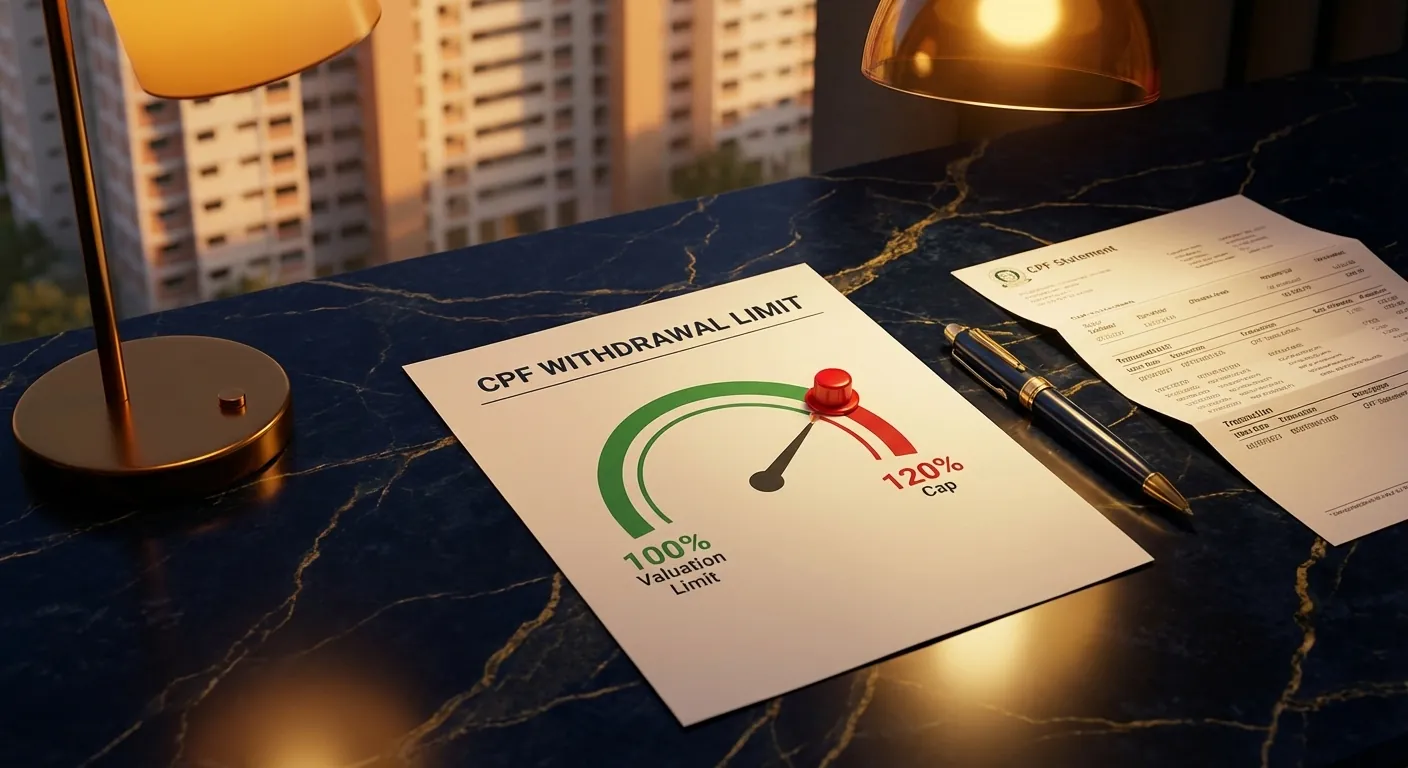
For a S$1.5M condo, the 120% Withdrawal Limit caps lifetime CPF use at S$1.8M (principal + accrued interest combined). HDB flats have no equivalent ceiling.
HDB flats financed by an HDB loan have no Withdrawal Limit. HDB flats financed by a bank loan do, and the same 120% rule applies.
4. The Basic Retirement Sum (BRS) for a Second Property
If you already own one property and are buying a second, you have to keep the Basic Retirement Sum across your OA and SA before you can tap any more OA. The 2026 BRS is S$106,500. Members aged 55 and above keep the Full Retirement Sum (S$213,000 in 2026) in the Retirement Account instead. None of this applies to your first property.
Accrued Interest: The Number That Surprises Most Sellers
Every dollar of CPF OA you use for property accrues interest at 2.5% p.a., compounded. That is the same rate your OA would have earned if you had left the money there. When you sell, you have to return the principal plus accrued interest to your CPF account. The money goes back to you, not to the government, but it comes out of the sale in cash.
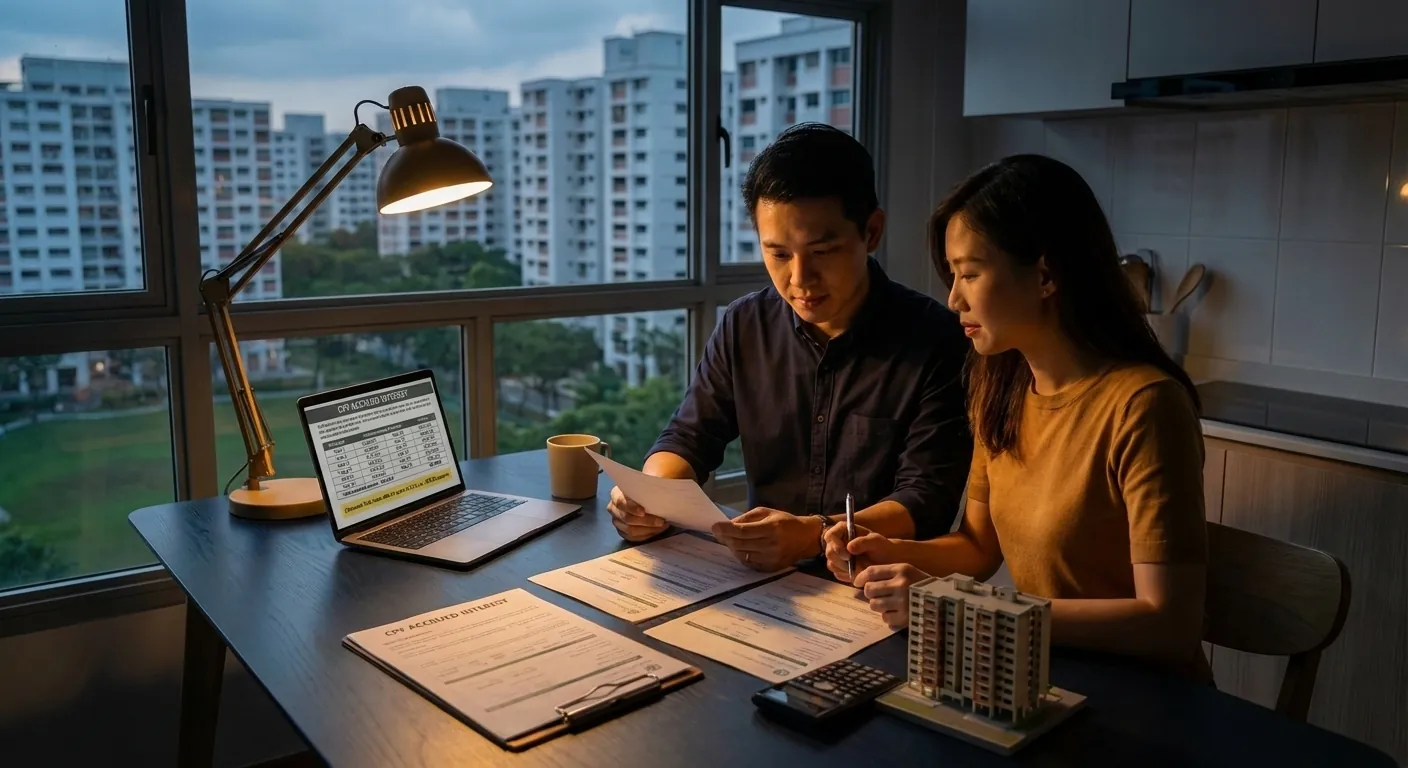
S$300,000 of CPF used at the start of a 25-year loan accrues over S$200,000 in interest. The cash you walk away with at sale shrinks by exactly that figure.
Here is what that means in practice. Your property has to appreciate faster than 2.5% p.a. (plus stamp duty and legal costs) just for you to break even on the cash you pull out at sale. Plenty of HDB sellers end up with a "negative cash sale". They refund CPF in full and walk away with nothing in hand, even though their CPF balance has gone up.
Cash refund shortfall: If the net sale proceeds cannot cover the full CPF refund, you are not asked to top up from your other savings. The refund is capped at the net proceeds, and CPF writes off the shortfall. The catch is that you have lost the use of that "missing" interest in retirement.
OA for Monthly Instalments vs Paying in Cash
Most buyers reach for OA deduction by default because it keeps their cash. That feels right. But the maths does not always point one way.
Your OA earns 2.5% p.a. tax-free. A typical bank mortgage in April 2026 costs 1.45%–1.85% p.a. (see current home loan rates). If you can comfortably service the mortgage in cash, every dollar you leave in OA keeps earning 2.5%, which is roughly 0.6%–1.0% p.a. more than the loan costs you. On top of that, you avoid the accrued interest debt altogether.
The trade-off is real, and it is personal. Paying in cash makes sense when you have spare liquidity, you are well below 55 with strong CPF growth, or you plan to stay in the property for the long haul. OA repayment makes sense when cashflow is tight, when you are setting aside cash for renovation or other near-term costs, or when the loan is small enough that accrued interest never adds up to much. I tell clients to settle this before they pick the bank package, not after.
Worked Examples: HDB and Private Condo
Example A: S$700,000 HDB Resale, HDB Loan
Couple, both 35, combined OA balance S$220,000. They take the HDB concessionary loan at 2.6% p.a. The 20% downpayment is S$140,000, all of it from OA. BSD (~S$15,600) also comes from OA. The monthly instalment of about S$2,250 deducts from OA each month. They keep S$20K in each OA earning the 3.5% extra-interest tier. No Withdrawal Limit applies here. CPF accrued interest still compounds at 2.5% on every dollar they use.
Example B: S$1,000,000 Condo, Bank Loan
Single buyer, age 38, OA balance S$280,000. Bank loan at 1.45% fixed for 3 years, 75% LTV. The 25% downpayment is S$250,000. Of that, S$50,000 has to be cash (5%) and S$200,000 can come from OA (20%). BSD (~S$24,600) is payable from OA. The monthly instalment of about S$2,975 deducts from OA. The Withdrawal Limit is S$1.2M (120% of S$1M). Over a 30-year tenure the cap is unlikely to bite, but the buyer should still run the numbers through the TDSR/MSR affordability calculator and check the qualifying loan size against the MAS 4% stress test floor.
Decoupling, Second Properties, and the BRS Rule
Couples decoupling to buy a second property (one spouse buys out the other's share) are the ones who trip on the BRS rule most often. The buying spouse has to keep the BRS (S$106,500 in 2026) across OA and SA before any OA can go toward the new property. Run this check before you pay the buy-out, not after. The same goes for anyone using OA on a second property for the first time. Keep the BRS, then withdraw.
If you are thinking about an equity / cash-out loan on an existing property to fund a second purchase, the BRS rule sits on top of TDSR, so account for both. Our TDSR for private property guide covers the qualifying-income side, and the best loan for condo page lists current bank packages.
HDB Housing Grants and CPF
First-timer HDB buyers may qualify for the CPF Housing Grant, Enhanced Housing Grant, or Proximity Housing Grant. Grants land in your CPF OA and then flow into the purchase. One thing buyers miss: because the grant money goes through OA, it also accrues the 2.5% interest and has to be refunded to CPF when you sell. The HDB grant page has the current eligibility ceilings. Private properties do not qualify for any of these grants.
Refinancing and Selling: CPF Continuity
When you refinance from one bank to another, the OA deductions carry on without a break. You do not need to "restart" the CPF housing arrangement. The new bank simply takes over the deduction mandate. Compare the savings with the refinance savings calculator, and time the move with when to refinance.
On sale, the CPF refund is worked out on completion day: principal used plus accrued interest at 2.5% compounded. The conveyancing lawyer routes the refund straight from the sale proceeds. If you have leaned hard on OA and prices have gone sideways, expect a small cash cheque at the table, or none at all.
Plan CPF and Mortgage Together, Not in Isolation
Your CPF choices decide how much cash you keep at completion, how much liquidity you have for the next 25 years, and how much cash you walk away with at sale. The loan itself (rate, lock-in, repricing) decides your monthly cost. Most buyers sort out one of these and forget the other. Work through both at the same time, before you sign the Option to Purchase. For a printable version, download the Singapore Mortgage Free Report. It includes the funds-position card (cash + CPF OA needed vs available), TDSR/MSR at the MAS 4% stress floor, and a 16-bank rate comparison.
Further Reading
- Singapore Mortgage Free Report: Dan's full CPF + mortgage planning guide. Your funds position (cash + CPF needed vs available), TDSR/MSR at the MAS 4% stress floor, BSD/ABSD upfront-cost breakdown, and a 16-bank rate comparison in one downloadable PDF.
- CPF Accrued Interest on Sale: why your sale cheque shrinks, and the 2.5% refund trap.
- HDB Loan vs Bank Loan: rate, lock-in, and CPF treatment compared side by side.
- First-Time HDB Buyer Guide: HFE letter, OTP, downpayment timing, and CPF use through each step.
- PR HDB Loan Rules: the resale-only, bank-loan-only route and how CPF works for an SPR HDB buyer.
- TDSR for Private Property: how qualifying income and existing debts cap your loan.
- MAS 4% Stress Test: the floor rate that sets your maximum loan size.
- When to Refinance: CPF continuity and cost savings across a switch.
- CPF Board: Using Your CPF to Buy a Home: official housing withdrawal rules and eligibility.
- IRAS: ABSD: ABSD rates and confirmation that ABSD is cash-only.

About the author — Dan Ler has advised on Singapore home loans since 2017 at Nexus Mortgage SG, an independent brokerage comparing 16+ MAS-regulated lenders. Nexus is paid by the bank on disbursement, so there is no cost to the borrower.
Frequently Asked Questions
Yes. CPF OA can fund up to 100% of an HDB concessionary loan, including the downpayment, monthly instalments, and Buyer's Stamp Duty. There is no Withdrawal Limit cap for HDB flats taken on an HDB loan, as long as the lease covers the youngest buyer to age 95.
The Withdrawal Limit is 120% of the Valuation Limit, which is the lower of the purchase price or the property's market valuation. Once total CPF withdrawals (principal plus accrued interest) hit this cap, all further loan instalments must be paid in cash.
Before using CPF OA for a second property, members under 55 must keep the Basic Retirement Sum (S$106,500 in 2026) across their OA and Special Account. Members aged 55 and above must keep the Full Retirement Sum (S$213,000 in 2026) in their Retirement Account.
Yes. On sale, you must refund every dollar of CPF OA used plus accrued interest at 2.5% p.a. compounded back to your CPF account. The money returns to your own retirement, but it reduces your cash proceeds.
Your Mortgage Broker
Talk to Dan Ler — Nexus Mortgage SG
I help private property buyers optimise their CPF usage alongside their mortgage — from structuring down payment sources to comparing every available bank package. Free of charge: the bank pays the referral fee on disbursement.
WhatsApp Dan Now — Free CPF & Mortgage Review →Also explore the free Advanced Mortgage Calculator to model your monthly cash and CPF instalment split.
General information only, not financial advice. CPF rules, Withdrawal Limits, and Retirement Sum figures change. Numbers reflect April 2026. Official references: CPF Board and IRAS ABSD.